


What is migraine?
Migraine is characterised by recurrent moderate to severe headaches with a number of associated symptoms. The underlying pathophysiology is complex, involving the vasculature, central and peripheral pain signalling pathways, as well as inflammation. Both genetic and environmental factors are known to play a part in the disorder.
Internal or environmental triggers can activate a series of events that generate a migraine headache. The clinical phases of an attack are well described, but may not be experienced by everyone:
- The prodrome phase can include vague vegetative or affective symptoms as much as 24 hours before the onset of a migraine attack. These symptoms can include excessive yawning, hyperactivity, mood changes and sleepiness.
- The aura phase consists of focal neurological symptoms that last for up to one hour. Symptoms may include visual, sensory, or language disturbance as well as symptoms localising to the brainstem.
- The headache phase usually starts within an hour of resolution of the aura symptoms. The typical migraine headache usually appears with unilateral throbbing pain and associated nausea, vomiting, sensitivity to light and sound. Without treatment, the headache can last for up to 72 hours.
- The postdrome phase can last for up to 24 hours after the throbbing headache pain has resolved. Many patients experience malaise, fatigue, and transient return of the head pain in a similar location following coughing or sudden head movement. This phase is sometimes called the migraine hangover.
Migraine is broadly classified into episodic migraine and chronic migraine based on the number of days a person experiences migraine each month:
- Episodic migraine has headache attacks taking place <15 days per month
- Chronic migraine has headache attacks taking place ≥15 days per month with features of migraine on at least 8 days per month.1
How common is migraine?
Headache disorders are among the top three most common neurological conditions for most age groups.2 The 2023 Global Burden of Disease study showed that the global age-standardised prevalence of migraine was 14.1% (12.1–15.9), and was significantly higher among women (17.6% [15.2–19.9]) than men (10.5% [9.0–12.1]).3
Most people with migraine have EM but those with CM experience a greater impact on their daily activities and use of healthcare resources, with reduced health-related quality of life and higher rates of co-morbidities.4
What is the burden of migraine?
In 2023, migraine caused 40.9 million (27.1–56.9) years lived with disability (YLDs) and, in terms of age-standardised YLD rates, migraine ranked eighth among all conditions, with
a rate of 487.5 YLDs (323.0–678.8) per 100 000.3 Although tension-type headache was almost twice as prevalent as migraine (24.9% vs 14.1%), migraine accounted for 90% of YLDs attributed to headache disorders, with similar findings worldwide (Figure 1).
Figure 1. Age-standardised years lived with disability for tension headache and migraine, globally and across regions
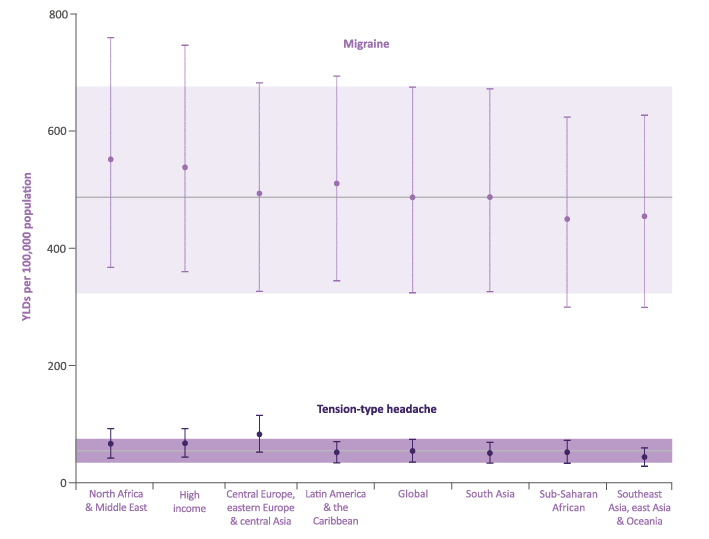
Migraine carried a substantially higher disability weight (0.441 vs 0.037), a reflection of the more severe symptoms associated with migraine episodes than with tension-type headache episodes.3
For migraine, medication-overuse headache contributed 6.0% of the prevalence estimates for men and 5.0% for women, but 22.6% and 14.1% of the YLD estimates, respectively.3
What are the economic costs of migraine?
Health economic assessments in Europe and North America have demonstrated the significant costs of migraine in terms of increased healthcare resource utilisation (HRU) and reduced work productivity.5,6
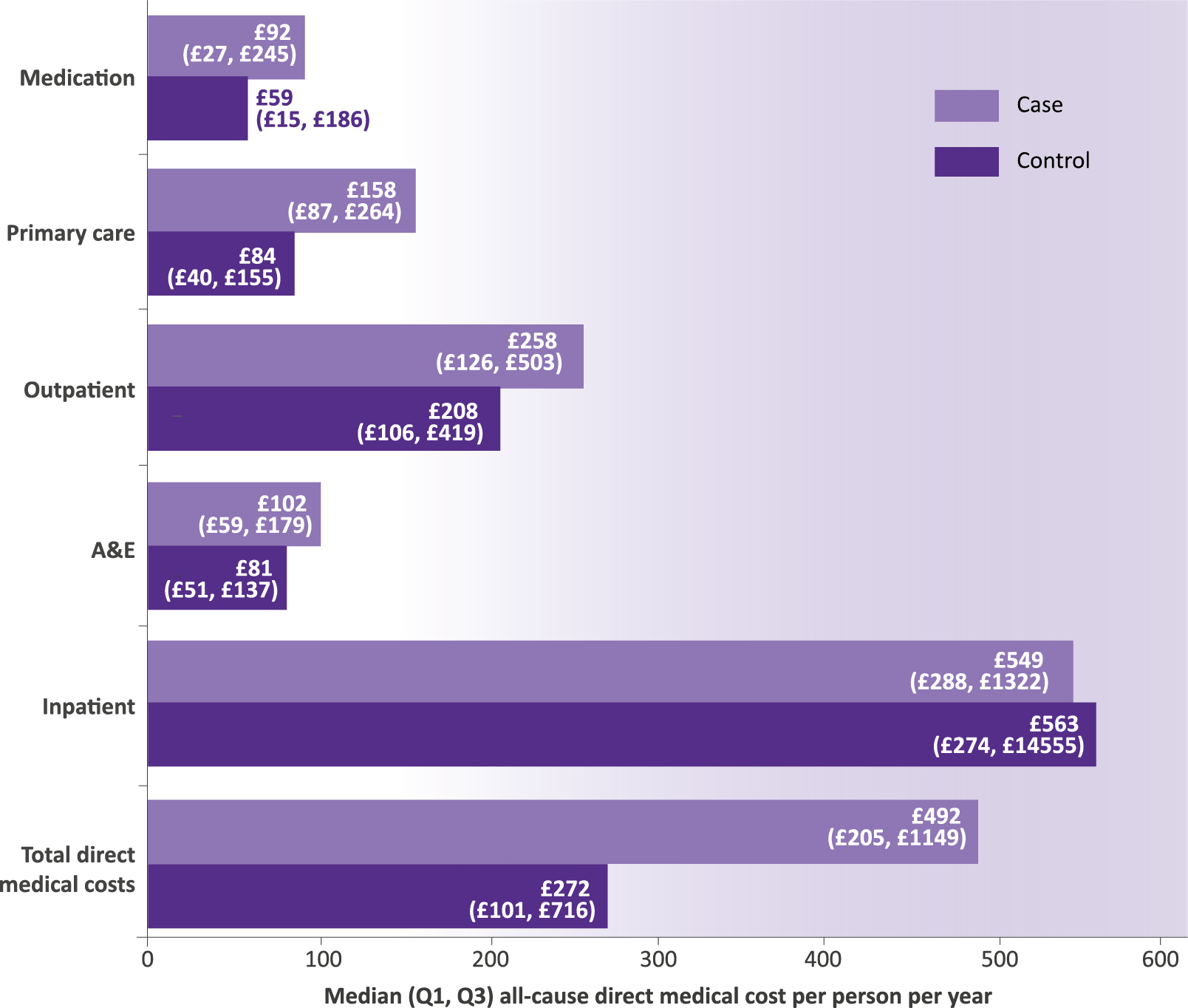
In the UK, a study of more than 62,000 people seeking migraine care from 2017-2022, and matched controls, showed that all-cause direct medical costs per person per year were approximately 81% greater (p < 0.0001) in those with migraine (median [quartiles 1,3]: £492 [£205, £1,149]) than controls (£272 [£101, £716]) (Figure 2).5 Costs were largely driven by interactions with secondary care.
Figure 2. All cause median costs of care (patients with migraine vs controls).
An analysis of data from the US National Health and Wellness Survey (2016) showed that patients with migraine and ≥4 monthly headache days had significantly greater direct and indirect costs than matched controls: all-cause direct HRU ($24,499.90 vs. $15,318.91, p = 0.013) and indirect ($14,770.57 vs. $5,764.93, p < 0.001).6 Absenteeism (11.8% vs. 6.3%, p = 0.030), presenteeism (36.0% vs. 17.5%, p < 0.001), overall work impairment (41.0% vs. 20.9%, p < 0.001) and activity impairment (45.4% vs. 25.4%, p < 0.001) were greater in patients with migraine compared to controls.
References
- Headache Classification Committee of the International Headache Society (IHS) The International Classification of Headache Disorders, 3rd edition. Cephalalgia. 2018 Jan;38(1):1-211.
- Migraine and other headache disorders. October 2025
- GBD 2023 Headache Collaborators. Global, regional, and national burden of headache disorders, 1990-2023: a systematic analysis for the Global Burden of Disease Study 2023. Lancet Neurol. 2025 Dec;24(12):1005-1015.
- Dodick DW, Loder EW, Manack Adams A et al. Assessing Barriers to Chronic Migraine Consultation, Diagnosis, and Treatment: Results From the Chronic Migraine Epidemiology and Outcomes (CaMEO) Study. Headache. 2016 May;56(5):821-834.
- Collings S, Patel A, Gowman H et al. The cost of migraine to the NHS in England: a retrospective cohort study using electronic health record data from Clinical Practice Research Datalink (CPRD) and Hospital Episode Statistics (HES). Curr Med Res Opin. 2025 Sep;41(9):1641-1653.
- Buse DC, Yugrakh MS, Lee LK et al. Burden of illness among people with migraine and 4 monthly headache days while using acute and/or preventive prescription medications for migraine. J Manag Care Spec Pharm. 2020;26(10):1334–1343.